
In this article, we review the Audeze Maxwell 2, a wireless planar magnetic gaming headset featuring 90mm drivers with SLAM technology, Bluetooth 5.3 with Auracast and LDAC, currently selling for $329 USD (PlayStation version) and $349 USD (Xbox version).
Disclaimer: the Audeze Maxwell 2 (PlayStation version) was sent to us free of charge by Audeze, in exchange for our honest opinion.
Audeze
Founded in 2008, Audeze has become one of the few manufacturers specializing exclusively in planar-magnetic headphones – alongside brands like Hifiman, Dan Clark Audio, or even Meze more recently – with the CRBN as their notable electrostatic exception.
ÏA project that started when Alexander Rosson and Sankar Thiagasamudra – the two founders – met engineer Pete Uka, who had developed specialized flexible circuit materials for NASA, and realized the material would be perfect for headphones.
And, after some tinkering, the small team came up with the LCD series, which instantly became a reference for demanding listeners thanks to their massive planar-magnetic drivers and luxury design – the LCD-X remaining one of my favourite headphones to this day.
Audeze LCD-S20 Review
A trajectory that caught the eye of Sony Interactive Entertainment in 2023, who acquired the brand to strengthen PlayStation’s audio ambitions – without, however, taking away Audeze’s editorial independence. The Maxwell gaming line remained, the audiophile LCDs kept expanding, and new drops like the CRBN2 electrostatic flagship, or the Maxwell 2 we have in hand today, kept rolling out.
And if the original Audeze Maxwell claimed the title of my personal favorite headphone of 2024 – a genuinely surprising achievement for a product marketed as “gaming” – the real question is whether Audeze could push it any further. Because let’s be honest: the V1 already sat at the top of the pile, with barely any wireless competitor offering serious resistance.
Audeze Maxwell Review
Enter the Maxwell 2, a successor that, on paper, retains everything that made the original so special – 90mm planar drivers, 80+ hour battery, ultra-low-latency USB-C dongle, Bluetooth 5.3 – while adding the patent-pending SLAM acoustic system first seen on the CRBN2, a new ventilated head strap, redesigned earpads, Auracast support, and the FILTER AI noise reduction upgraded to high-bandwidth processing.
Another banger? Time to find out.
Audeze Maxwell 2
Out of the box, the Audeze Maxwell 2 didn’t look dramatically different from its predecessor – which ain’t too bad.
Design
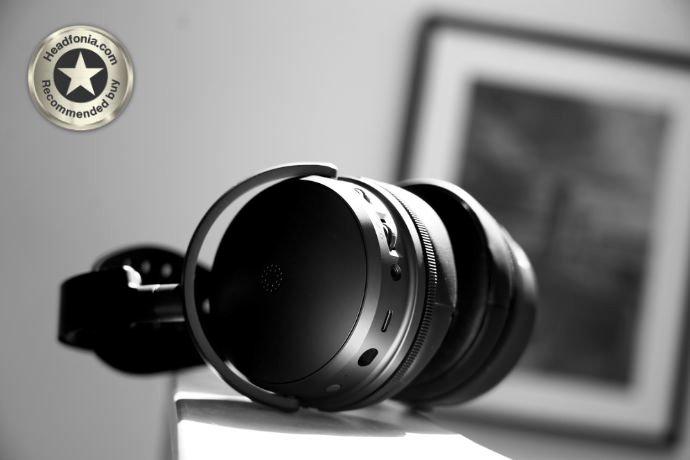
Same closed-back circu-maural silhouette, same dual-chamber earcups housing the 90mm planar drivers, same utilitarian matte gunmetal finish. And, if the overall silhouette hasn’t changed much from the original Maxwell, you can feel that Audeze clearly spent time refining the details, rather than reinventing the wheel.
Yet, once in hand, the Maxwell 2 updates slowly revealed themselves. The aluminium yokes have been refined, the spring-steel headband now hosts a wider, ventilated suspension strap – a genuine upgrade for anyone who’s logged marathon sessions with gen one – and the earpads are noticeably larger, with more vertical clearance.
Underneath, the spring steel headband and aluminum yokes remain, giving the headset a sense of structural rigidity that most gaming headsets simply can’t match. Even better, the earpads are now magnetically attached, making replacement a ten-second affair instead of the usual pad-wrestling exercise, a trend that seems more and more popular with modern headphones – like Meze for example. A welcome change for those of us with bigger ears, or those who found the original’s pad opening a touch tight over long session.

Last but not least, the Maxwell 2 introduces the ReSkin system – magnetic side plates on each earcup that you can swap out for different designs, including upcoming limited-edition collaborations. A fun addition, if you’re into customization, and a clever move from Audeze to keep the product feeling fresh months after purchase. A bit gimmicky on the surface, sure – but at a time when every gaming brand is chasing personalization, it’s a more elegant solution than glued-on plastic, stickers, or RGB LED
Personally, I kept the stock plates on. The Maxwell 2 restrained, understated look better matching my desk setup, but I can see this feature landing well with streamers and content creators who want to coordinate their gear with their setup.

Build Quality
As usual with the brand recently, build quality is absolutely top-notch and, compared to first set of LCD-X/XC, the various adjustments brought on the Audeze Maxwell 2, make for a very solid creation.
Aluminium yokes, spring-steel headband, reinforced dual-chamber earcups – everything feels tank-like, with zero creaks or flex when I twisted the cups. The magnetic side plates lock into place with a satisfying click, the detachable boom mic plugs in solidly with no wiggle, and the 3.5mm jack feels reassuringly snug. A headset clearly engineered to survive being thrown into a gaming bag, tossed on a desk, or dragged across a LAN party.
A level of craftsmanship that came at a cost: weight. And, even if the new wider headband did a great job distributing pressure, with 560 grams sitting on top of your head, long sessions will still make the Audeze presence known. A weight increase that made the Maxwell 2 noticeably heavier than the first generation at 490g, and a world away from competitors like the Sony INZONE H9 II, at 273g – even though both models now comes from the same main house.
More on that in the Comfort section.

Layout
Like the first model, the Audeze Maxwell 2 comes with a surprisingly wide array of control, directly embedded on the headphones itself.
On the left side you get:
- a detachable boom mic port, in addition of all the various microphones already included,
- a 3.5mm TRRS headphone input, in case your source doesn’t support Bluetooth or USB,
- an USB-C port for charging and wired USB audio
- a volume dial, for volume decrease/increase, doubling as an EQ/Media presets selector if you click it
- a microphone dial, for volume decrease/increase, doubling as a Game/Chat mix wheel, when paired with a compatible source
- and last but not least, an AI noise-reduction toggle button
On the right side, you have:
- a power / Bluetooth pairing button
- a microphone mute toggle
An impressive I/O, covering almost all need, but one that’ll ask a bit of tinkering at the beginning, as each and every button offers a dual use.

Sound
For this review, my main sources were: PlayStation 4 Pro / XBox Series X/ iPhone 17 Pro Max / FiiO M33 R2R – the latter paired via LDAC to test the Bluetooth ceiling, the others via the included USB-C dongle or direct USB wired connection.
Files were played from either Apple Music (Hi-Res when available) / Spotify Lossless or my own music library via Plex. Some tracks will be highlighted, just so you can try them at home too!
Overall Signature
So, how does the Audeze Maxwell 2 actually sound? In one word: impressive.
I’ll be upfront – I wasn’t sure Audeze had anywhere left to go. The original Maxwell already sat at the top of my wireless ranking, ahead of Sony, ahead of Sennheiser, ahead of everything marketed as “gaming” that I’d tested in the past three years. So the question wasn’t really “is the Maxwell 2 good?” – of course it was going to be good – but whether Audeze could meaningfully improve on something that (for me) already had no competition. And the answer is… yes.
The first thing that hit me – and I mean in the opening seconds of my first session – was the bass. Not louder, not boosted, but deeper and more physical than I remembered the original being. SLAM, Audeze’s new acoustic management system borrowed from the CRBN2 electrostatic, clearly does something measurable down there: sub-bass had a weight and presence that the first Maxwell only hinted at, while mid-bass stayed tight and controlled, never bleeding into the midrange. The kind of improvement that’s subtle at first, then impossible to unhear once you’ve noticed it.

Spatial performance followed the same trajectory. Fire up any competitive FPS like Counter-Strike, and the Maxwell 2 made the original feel almost flat by comparison – footsteps didn’t just register, they carried directional information that felt instinctive rather than processed. Environmental cues – rain on metal, a reload echoing through a corridor, a distant explosion reverberating behind a wall – gained a physical quality that smaller dynamic drivers simply can’t reproduce.
The 90mm planars moved enough air to make the sonic space feel real, not simulated; and the Tempest 3D support on the PlayStation version only amplified that foundation – even if I still marginally prefer Dolby Atmos on that aspect.

But here’s the thing – and this is where the Maxwell line continues to separate itself from every other gaming headset on the market – the Maxwell 2 sounded just as compelling with music. Switch from a competitive shooter to a well-recorded jazz album, and the tonal balance held up remarkably well, the signature offering excellent extension on both ends; midrange carrying the kind of body and texture I usually associate with Audeze’s LCD line – not at the same level of refinement, obviously, but the family resemblance was unmistakable. For a wireless gaming headset at $329, that comparison alone says a lot.
Paired via Bluetooth with my iPhone 17 Pro Max, the LDAC codec kept things remarkably close to the USB-C dongle experience. Not identical – there was a slight softening of transients and a marginal compression of the dynamic range over Bluetooth – but the gap narrowed considerably compared to the original Maxwell.
And, running the same tracks through the FiiO M33 R2R via LDAC, the Maxwell 2 tightened up even further: better transient definition, cleaner edges on vocals, and noticeably more grip in the bass. A sign that the drivers are capable of more than most sources will extract from them – and a good reason to pair this headset with a proper DAP if you have one lying around.

The dongle connection remained the sweet spot, though. Plug the USB-C transmitter into a console or PC, and the full 24-bit/96kHz pipeline opened up with ultra-low latency. Transient attacks sharpened, the soundstage gained depth, and the bass tightened into something genuinely authoritative. For serious gaming or critical music listening, the dongle was the way to go – but the fact that Bluetooth got you 90% of the way there is impressive in itself.
Head to head against the original Maxwell, the improvements weren’t night-and-day – think of a major firmware update that somehow recalibrated the entire frequency response. The bass dug deeper and punched harder, the spatial cues felt more precise, and the overall coherence was tighter; a presence that really struck me when playing Alan Wake 2 and Baldur’s Gate 3. If the first one really shone with the new Maxwell – great game by the way – playing in split-screen with my spouse, and the headphone, finally allowed each of us to fully appreciate the full array of details the developers included in the RPG (playing with our home theater blending our two side at the same time).
The Maxwell was already the best-sounding gaming headset on the market; the Maxwell 2 simply widened the gap. And compared to proper wired audiophile headphones like my LCD-X, the Maxwell 2 didn’t fell too short in outright resolution and dynamic range – which was more that unexpected, given the price gap and the fact that the LCD-X runs through a dedicated amplifier.
Same goes for the soundstage. Width was genuinely impressive for a closed-back – instruments spread convincingly across the left-right axis without sounding artificial or processed. Depth was more modest, and the overall stage didn’t quite reach the three-dimensional layering you’d get from an open-back planar, but that’s an unfair comparison for a sealed wireless headset. Within the world of closed-back gaming headphones, the Maxwell 2 held its own comfortably; separation was clean even on busy passages, imaging precise enough to pinpoint sounds in a 360-degree field without relying on DSP trickery.

Is it perfect? Almost. And I genuinely mean it – we’re not talking about a gaming headset that “sounds good for the category.” The Maxwell 2 is, as far as I’m concerned, one of the best Bluetooth headphones I’ve tested in recent memory, and the best gaming headset I’ve ever put on my head – period. The usual closed-back wireless limitations applied, sure: the last few percent of treble air and micro-detail that an open-back planar retrieves effortlessly stayed out of reach, and the dynamic range – while excellent for a wireless product – couldn’t quite match what a dedicated wired chain delivers. But that’s about it.
Head to head against the new Hifiman Arya Wi-Fi that I also got for review – a headphone that, on paper, should have the advantage of an open-back design and Hifiman’s mature planar tuning – the Maxwell 2 held its ground with surprising confidence. And if I’m being completely honest, I might actually prefer the Audeze: the bass carried more authority, the build inspired more trust, and the overall package – Bluetooth 5.3 with Auracast, the dongle, the microphone, 80 hours of battery – made the Hifiman feel almost spartan by comparison. A result I wasn’t expecting, and one that says a lot about how far Audeze pushed this generation.
And unlike most headphones, where positioning on your head shifts the tonal balance noticeably, the Maxwell 2’s 90mm drivers filled the earcups so completely that the sound remained consistent regardless of how the headset sat. That’s the advantage of planar magnetic technology at this scale: the diaphragm covers the entire listening area, edge to edge, leaving virtually no dead zones. The sound didn’t just reach your ears – the sound surrounded them – a level of consistency that dynamic drivers, with their smaller radiating surface, simply can’t replicate.

So yeah, a genuine step forward. Not a revolution – the original Maxwell was too good for that – but a meaningful refinement that widened the gap between Audeze and everyone else in the wireless gaming space. And, more importantly, a headphone that made me forget I was wearing a “gaming headset” every single time I put it on, especially when playing – which was the goal at the end.
The article continues on Page two, after the click here, or after the jump.




creditSource link