

Marcelo reviews the FiiO SNOWSKY NATURE, a budget closed-back headphone with a 50mm dynamic driver and retro wood-grain styling. It is currently priced at $39.99.
Disclaimer: I received this sample in exchange for my honest opinion. Headfonics is an independent website with no affiliate links or services. I would like to thank FiiO for their support.
Click here to learn more about the FiiO audio products previously reviewed on Headfonics.
This post follows our current scoring guidelines, which you can read in more detail here.
It seems like history is repeating itself, as I remember it was years ago that audiophile-grade budget IEMs were coming out on the market.
This time, it seems like it’s budget headphones’ turn, as I recently noticed wallet-friendly headphones marketed for budget entry-level audiophiles have started coming out.
The FiiO SNOWSKY NATURE, which sells for $39.99, belongs to the budget entry-level headphone category marketed for audiophiles.
It features advanced driver materials such as a Japanese carbon-black composite diaphragm and a lightweight yet solid construction with a wooden design that most audiophiles and audio enthusiasts would like.
How will the FiiO SNOWSKY NATURE fare in my listening test? And how will it compare to other headphones like the Kiwi Ears Altruva and the FiiO JadeAudio JT3? Let’s find out.

Features
The FiiO SNOWSKY NATURE is a set of closed-back dynamic driver headphones. It features a 50 mm dynamic driver with a Japanese carbon-black composite diaphragm, and I’m not sure whether the diaphragm’s country of origin makes any difference.
The NATURE has an impedance of 24Ω and a sensitivity of 101 dB/mW @1kHz. It is designed to have low impedance and high sensitivity so that even a small USB dongle can drive it.

Design
My black version of the NATURE looks so elegant that if I hadn’t known the price and saw it from 2 feet away, I would have thought that it cost at least 4 times its price.
The all-black NATURE, with the dark brown earcups and wood pattern, has a matte gloss finish that makes it look sophisticated.
However, when I held it, it became obvious I was holding budget headphones. The headband’s leather feels rubbery and synthetic, and the foam is not memory foam; I like the firmness, though, as it has just enough firmness and is not too soft.
The yokes are made of metal, presumably aluminum, which helps the NATURE have a quality feel and prevents any creaking sound like most headphones with plastic yokes.
Though the earpads are not memory foam, I like them as they feel soft and comfortable. However, although they look very elegant, the earcups sound plasticky when tapped.
I’m not really complaining, though, as these are to be expected at this price, except for their elegant appearance.
My only gripe is that the LR indicator is hard to see, especially in a darkened room. My workaround is to look at the top of the headband to see the SNOWSKY logo is right side up; then it is the correct wearing position.
The SNOWSKY NATURE is also available in a lighter brown color.

Stock Cable
I was delighted to see a detachable 3.5 mm TRS cable considering its low price. The 1.5-meter-long detachable cable is terminated with an L-shaped 3.5 mm stereo plug.
Though the angled plug is made of rubber, the rest of the hard parts are made of metal, and the wire is sleeved, which feels really nice and not cheap, unlike rubber-covered wires in this price range.

Comfort & Isolation
After stretching the yokes to or near maximum, the NATURE is very comfortable to wear, even for long listening sessions, thanks to its weight of only 240 grams and the soft earpads.
The headband pressure is just right; NATURE stays in place even if I shake my head vigorously, and I feel no concentration of pressure around my ear area.
I find the noise isolation to be as good as many other closed-back headphones. There is drastic attenuation of high-frequency noise, but people’s voices can still be heard, and when the music is playing even at low volume, the noise is easily masked.
Packaging & Accessories
I had a pleasant and easy unboxing of NATURE’s white-and-green themed box, which measures 202 x 165 x 110 mm. There is a drawing of the NATURE headphones on the front, and text all around the box.
The packaging is basic and includes the NATURE headphones, a 3.5 mm 1.5 m cable, a headphone pouch, and 2 user manuals.

Sound Impressions
I put the NATURE through a 50-hour burn-in, which I find necessary and longer than my usual 24-hour burn-in. I found a small improvement in smoothness after the burn-in, but nothing drastic.
For the sources, I used my xDuoo XP-2 Bal and MUSE HiFi M3 Ultra DAC amplifiers, with my Android phone and the FiiO M15S DAP, using either YouTube Music, UAPP, or PowerAmp music player Apps. No EQ or any sound enhancement programs were used.
I used the stock cable and listened at medium-to-loud volume levels.
Summary
I was quite surprised when first listening to the NATURE, as I was expecting a warm and bassy sound based on its looks. It turns out the NATURE has a monitoring-like sound signature with a more forward treble presentation than an absolutely neutral one.
I like how the bass is fast on its feet and has a tight, articulate, and detailed sound that is always in sync with the rest of the music. The bass is very neutral and has no boosting in its response, giving me good bass clarity.
The midrange has very good clarity, detail, and resolution, to the point of sounding analytical, which may or may not be to the liking of most listeners. The midrange sounds very clear, with no added warmth; however, the instrument note weight is on the light side.
I find that there is too much elevation in the upper midrange; add to that the elevated treble, and it is the main cause of the thin note weight and the occasional nasality in the vocals.
Although the treble is relatively flat in frequency response and has a detailed and highly resolving sound, it has a forward presentation. This makes the overall sound balance of the NATURE treble-centric, which may appeal to people who like treble.

Coloration
I have no issues with headphones having a moderately forward treble, especially those marketed for detail.
However, I find the NATURE too treble-forward for me. I like the resolution and details, but the forward treble keeps me from turning up the volume for a fatigue-free long listening session. Additionally, I also hear occasional nasality in the vocals
Staging & Dynamics
If there is one redeeming quality in the NATURE, it is that the soundstage is spacious and wide. Though there is perceivable depth in the stage, it is not as apparent as its width; I also like the soundstage height.
Even without much stage depth, I still find the soundscape to be quite immersive, with a noticeable surround-sound sensation.
Thanks to its high perceived resolution, the image has good edge definition and transparency; it is easy to imagine the singer is just in front of me when I listen with eyes closed.
There is good side-to-side separation in the instruments, and the front-to-back instrument layering is perceivable as well, though not as great.
Thanks to its 50 mm large dynamic driver, I never manage to overload it with power without my hearing overloading first, and there seems to be more dynamic headroom left at loud volume.
I also find that even when I’m using those small USB-C to 3.5 mm audio adapters not mentioned in this review, the volume can reach high without much audible strain.

Synergy
The NATURE is fairly sensitive and easy to drive, delivering full-range, dynamic sound, and loudness easily with the sources I used it with.
And despite its sensitivity, the NATURE never produced or picked up any noise with any of the sources I paired it with. There is no radio-frequency interference, and it was not sensitive enough to allow the sources’ noise floor to be heard.

Pairings
I enjoyed the NATURE when paired with my MUSE HiFi M3 Ultra, which adds warmth to the sound of every piece of music and headphones. The NATURE is easy enough for the M3 Ultra to drive to loud volume without straining.
I switched to the xDuoo XP-2 Bal; I heard a more analytical sound. The NATURE clearly reveals XP-2BAL’s analytical sound signature.
When I finally used the FiiO M15S with its powerful 1000 mW maximum output, I heard improved bass depth and drive. The M15S’ bassy, powerful sound presentation in relation to the other sources was clearly revealed.

Selected Comparisons
FiiO JadeAudio JT3
Technical & Design
The FiiO JT3 features a 50 mm PEK+PU composite polymer diaphragm dynamic driver with a lightweight voice coil assembly and a powerful N52 magnetic system, which is the strongest magnet in the headphone industry.
The acoustic design is open-back, which minimizes back-wave reflections returning to the listener’s ears, making the sound cleaner and the soundstage larger than a closed-back design.
However, this comes at the expense of some bass response, sound isolation, and power handling.
Another key feature is the angled driver placement: the drivers are positioned slightly forward and angled slightly backward.
This arrangement was used to simulate how sound waves naturally hit our ears when listening to speakers or live musical performances.
The JT3 has an impedance of 80Ω, which is higher than usual, and a sensitivity of 97 dB/mW.
I like the sharp and handsome aesthetics, with shiny metallic parts contrasting with black leather and plastic, making it look more expensive than its price would suggest. The headband is mainly made of a stainless steel-like bent metal connected to the metal yokes with plastic parts.
The headband adjuster, which touches the top of the head, is made with a leather-like material lined with memory foam pieces. There is also a JadeAudio logo print at the top of the headband adjuster.
The earcups are oblong-shaped, made of plastic, and have 3.5mm input jacks on the underside of each. The back cover, though, is a nicely designed metal grill which seems to be made of aluminum alloy.

Performance
Compared to the flat-treble forward sound of the NATURE, the JT3 sounds more balanced, with a V-shaped sound signature, louder bass, warmer vocals, and less treble forwardness.
Both have good resolution, but I find the NATURE to be better, at the expense of treble forwardness.
In terms of soundstage, the NATURE has a wider stage, but the JT3 is more proportional in width, depth, and height. And though the image in the JT3 isn’t as defined as the NATURE, the JT3 image is more layered and more holographic in comparison.
I find them both sensitive and efficient, which can be driven with a modestly powered source without worrying about dynamics. Both can go very loud when driven with higher-powered sources.
FiiO JadeAudio JT7
Technical & Design
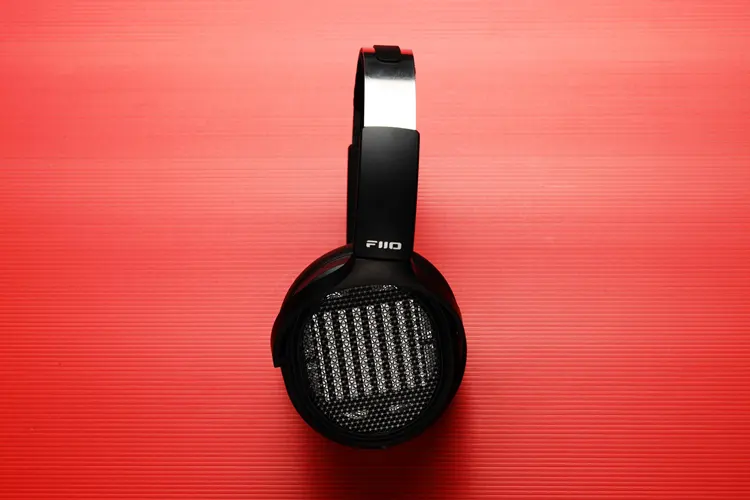
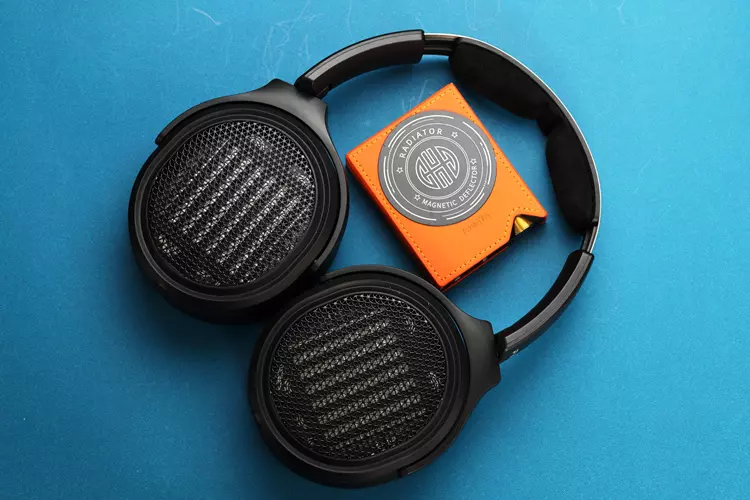
The JT7 is a set of open-back planar driver headphones. They feature a proprietary 95 x 86 mm planar driver with a 3-um ultra-thin diaphragm. They have an impedance of 18Ω and a sensitivity of 92 dB/mW.
The JT7 has a dual-sided magnet array, receiving a symmetrical driving force on the diaphragm in both forward and backward directions, resulting in stronger, more linear motion. The magnets combine high-energy neodymium-iron-boron with lightweight ferrite.
Lightweight design, multi-axis rotation, foldable design. The yokes can swivel and fold for comfort and a smaller storage footprint.
The design can be used at home or at a professional recording studio. I also like how the shiny planar diaphragm gleams through the magnet array and perforated screen earcups.
Except for the earpads and headband cushion, the JT7 is primarily made of plastic, with the only metal parts being the screen at the back of the driver and the headband.
Performance
The JT7 sounds near-neutral and balanced, with some lumpiness in the perceived frequency response in the midrange and treble, while the NATURE has a leaner sound due to its treble elevation.
In terms of sound staging, NATURE is wider, but JT7 has a more uniform width-to-depth ratio, albeit with a smaller soundstage overall. When it comes to imaging, NATURE sounds more defined while the JT7 is more diffused.
I find the NATURE to be more sensitive and dynamic than the JT7, especially with less powerful sources, as the JT7’s planar driver seems to be more difficult to drive.

Kiwi Ears Altruva
Technical & Design
The Altruva features customized 50mm dynamic drivers with powerful neodymium magnets, a composite diaphragm of PU and PEK for rigidity and low distortion, and a copper shorting ring in the magnet gap that creates a more consistent, stable magnetic field.
This results in lower distortion and higher potential diaphragm excursion for improved bass.
Designed with an open-back, full-sized earcup, the Altruva allows the unhindered flow of sound waves through the earcup, reducing earcup reflection and the sound coloration it causes, which should result in a natural, spacious, and airy sound.
Under both earcups is the widespread and non-proprietary 3.5mm input connector, meaning it is easy to replace the included 3-meter-long 3.5mm terminated cable with many third-party options available.
A pair of extra velour earpads is included in addition to the vegan leather already installed from the factory. They are easily replaced by twisting the earpad to the left to remove the assembly.
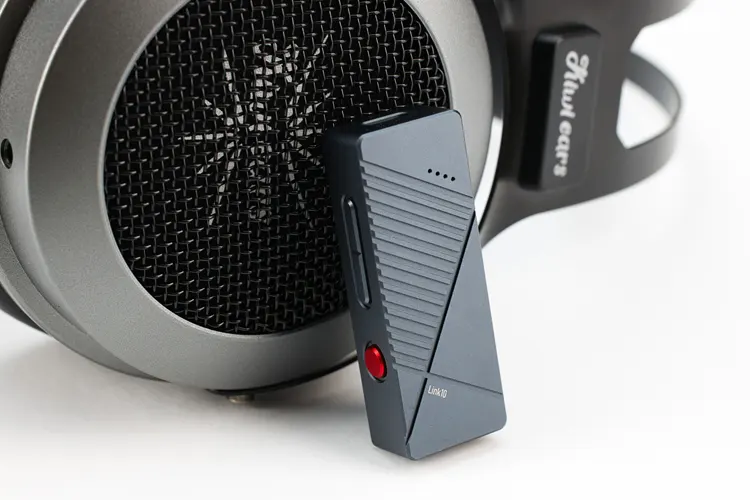
The Altruva is available in two colors: a traditional brown with a wooden pattern and a modern, industrial-looking grey, which is the one we have here.
I like the industrial look and the sturdy feel, which doesn’t produce a creaky sound when being moved around. There is a Kiwi Ears logo behind the wire mesh grills. The earcup is plastic.
Performance
The Altruva has a very flat frequency response and a neutral sound signature suited for monitoring use; in comparison, NATURE has a leaner sound with a more forward treble response.
I find the NATURE superior in terms of resolution, but the Altruva is better for long listening sessions.
When it comes to staging, I find the NATURE to have a wider but flatter stage, while the Altruva has a more balanced soundstage with proportional height, width, and depth.
And though the NATURE’s image is more defined, the Altruva’s has more front-to-back layering and is more natural overall.
Though both have good energy and sensitivity, I find the NATURE livelier, especially in the treble, while the Altruva has a more mature, yet still vibrant energy overall.
Both can take a lot of power and can go loud with dynamic headroom to spare.

My Verdict
I’m impressed with the FiiO SNOWSKY NATURE’s build quality and design. At this price point, I had a hard time thinking of more sophisticated, mature-looking headphones with this good of a build quality.
In terms of sound quality, I like the soundstage width, the imaging performance, and the resolution. However, I wish the treble were less forward, as it can cause thin note weight and fatigue.
The FiiO SNOWSKY NATURE is a well-built, classically good-looking headphone that is very comfortable to wear, marred only by the treble-forward tuning, which treble lovers might like but certainly is not to my taste.
FiiO SNOWSKY NATURE Technical Specifications
- Driver size: 50 mm dynamic driver
- Driver material: Japanese carbon-black composite diaphragm
- Impedance: 54Ω @1kHz
- Sensitivity: 101 dB/mW @1kHz
- Frequency response: 20-40kHZ
- Cable conductor: OFC
- Input plug: 3.5mm
- Connector type: 3.5mm
- Color: Black/Apricot
- Weight: 280g without cable
creditSource link