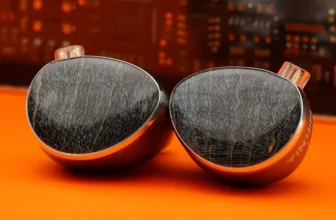


Today, we’re reviewing the new HiBy Zeta II, a four-hybrid, nine-driver IEM priced at $1,399 USD.
Intro
When the original Zeta was launched, the timing was strategic for HiBy. The company had just released the highly anticipated RS8, and the idea was clear: to offer a flagship IEM that would complement their new reference DAP.
However, while the RS8 quickly earned widespread praise and positioned itself among the top-tier players, the original Zeta didn’t quite reach the same level of acclaim. Many RS8 owners ultimately paired it with significantly more expensive IEMs that delivered higher technical performance and refinement.
HiBy Zeta Review
That said, HiBy has consistently shown a willingness to refine and evolve its products. With the release of the RS8 II, the brand also introduced the Zeta II — not merely as a complementary piece, but as a statement product with its own distinct identity.
Unlike the original model, which felt somewhat designed around the RS8’s ecosystem, the Zeta II appears to stand more confidently on its own. And that shift in philosophy is immediately encouraging.

Zeta II
Three years after the original Zeta, the Zeta II arrives with both refinement and meaningful technological upgrades. It adopts a four-hybrid, five-way crossover design built around nine drivers:
1 Dynamic Driver (DD) with DLC dome and HCCAW coil for low frequencies
3 Knowles Balanced Armatures (BA) for midrange and high frequencies
1 micro Planar Magnetic driver (PL) for enhanced upper-frequency resolution
4 Sonion Electrostatic drivers (EST) extending up to 70 kHz

Beyond the driver configuration, HiBy has implemented several structural and engineering improvements:
A silver-plated crossover circuit exceeding 380 µm in thickness
Independent 3D-printed acoustic chambers designed to minimise internal interference and optimise airflow
A harmonic enhancement structure aimed at improving treble clarity, bass airflow, and chamber balance
Like its predecessor, the Zeta II features a CNC-machined titanium shell with ion plating for enhanced durability and surface refinement. The included cable combines 4N pure silver with 5N silver-plated monocrystalline copper, representing a noticeable upgrade over the original.

Packaging & Accessories
The Zeta II arrives in a moderately premium presentation. While the overall packaging is clean and well-designed — with tasteful silver accents and generous tip selection — it stops just short of delivering a true “flagship-level” unboxing experience at this price point.
That said, the included accessories are satisfying and well-thought-out.
The leather carrying case feels genuinely premium, featuring a soft inner lining and high-quality exterior finish. Accessories include:
Cleaning tool
3 pairs of silicone ear tips
6 pairs of WG01/WG02 liquid silicone tips
Two protective pouches for the shells
The ear tips themselves are of excellent quality, offering flexibility for different preferences and fit types. While the outer box presentation could arguably feel more elevated, the overall accessory package is strong and thoughtfully assembled.

Sound Quality
While the original Zeta was bold and enjoyable, it did not fully match the technical refinement expected at its price point — particularly in resolution and stage organisation. If you are familiar with the original Zeta, the first thing you will notice with the Zeta II is that HiBy did not abandon its identity.
The Zeta II clearly preserves the warm, organic and soft presentation of the first generation, but in a more balanced way. It still delivers rich tonal density and musical flow, making long listening sessions extremely enjoyable. However, what immediately sets it apart is the level of refinement.
Where the original Zeta sounded fun and powerful but too thick and occasionally less disciplined, the Zeta II sounds significantly more controlled, more transparent and technically elevated. The warmth and smoothness are still there, but it is now cleaner and no longer compresses the stage or softens transient edges.
In short, Zeta II keeps the soul of Zeta I, but executes it at a much higher technical level. However, the overall smoothness and mellow signature might not attract audiophiles who need ultimate clarity, brightness, or neutrality. It may not aim for dramatic “wow-factor” tuning, but rather for balance, maturity, and long-term listenability.

Bass
The original Zeta was defined by its massive, textured and almost addictive bass response. Zeta II does reduce that authority a little — and also reshapes it.
Bass is still deep, powerful and full-bodied. Sub-bass extension remains strong, and the sense of weight is unmistakably present. However, the difference lies in control and speed.
Transient response is noticeably faster. Notes start and stop more decisively. The decay is cleaner and better managed. The mid-bass no longer narrows the stage like the original sometimes did. Instead, it sits more precisely in its place.
Resolution in the low frequencies has clearly improved. Layering is more articulate, and bass lines are easier to follow individually. It is still a warm bass tuning compared to neutral monitors, but it now feels intentional and refined rather than dominant.

Midrange
The midrange is where the evolution becomes even more obvious. Zeta I already had a clean and musical midrange despite its bass dominance. Zeta II elevates this with noticeably better transparency and realism.
Vocals sound more lifelike and immediate. There is improved clarity without losing warmth. The timbre feels more accurate, less thick, and more naturally layered.
Where the original sometimes felt slightly softened in the edges, the Zeta II presents vocals and instruments with more precise contours. Micro-details are easier to perceive. There is more air between instruments.
Importantly, HiBy did not push the upper mids aggressively. The presentation remains smooth and organic, but now with improved articulation and transient definition.
Female vocals in particular benefit from this refinement. They sound more open and believable, without becoming sharp.
This is not a transformation into an analytical monitor — it is an evolution into a more mature one.

Treble
The treble remains non-aggressive and smooth, but it is clearly more extended and better resolved compared to the original Zeta. There is better air and improved micro-detail retrieval. Cymbals and high-frequency textures sound more refined and less thick.
While the Zeta II still does not aim to be a bright or hyper-analytical performer in this range, it no longer feels slightly “polite” as Zeta I sometimes did. Instead, the treble integrates seamlessly into the overall presentation, resulting in a more balanced, technically convincing sound.
However, it doesn’t have the bite, energy or brightness that some audiophiles demand, which places the Zeta II in a very smooth territory. It’s very comfortable to listen to, but not very energetic or exciting.
The review continues on the second page. Click here or use the jumps below.




creditSource link