
This is the review of the ES Lab ES-2a Electrostatic headphone. It is selling for $2,000 USD.
Disclaimer: The ES Lab ES-2a was sent to me by ES Lab directly in exchange for my honest opinion.
ES LAB
It’s the very first time that we’re covering this brand on the site, and I wouldn’t be surprised if the name doesn’t ring a bell. I’m convinced that will change.
ES Lab is located in Hong Kong and they develop and manufacture high-fidelity electrostatic headphones. They also provide specialized repair services for electrostatic headphones, including discontinued models.
Our products not only deliver top-notch sound quality, The near-zero failure rate of electrostatic drivers produced by ES Lab has established us as a leading electrostatic headphone manufacturer.
ES Lab was founded with the introduction of our first product, the ES-1a. ES-1a incorporates our electrostatic transducer technology, which was developed through our extensive experience in servicing electrostatic headphones, along with our pursuit of the latest advancements in industrial materials and processes.
To be honest, I can’t remember how exactly I found the company. But after having read up on the company and their products, I decided to get in touch, and request a review.
I am very glad they accepted and we’ll be featuring both their EHT-7 Energizer as well as their ES-2a headphone. The latter is the one we’re looking at today.
ES-2a
The ES-2a isn’t the brand’s first headphone, but it is their latest development. You will also see this headphone be referred to as the ES-2α(Alpha).
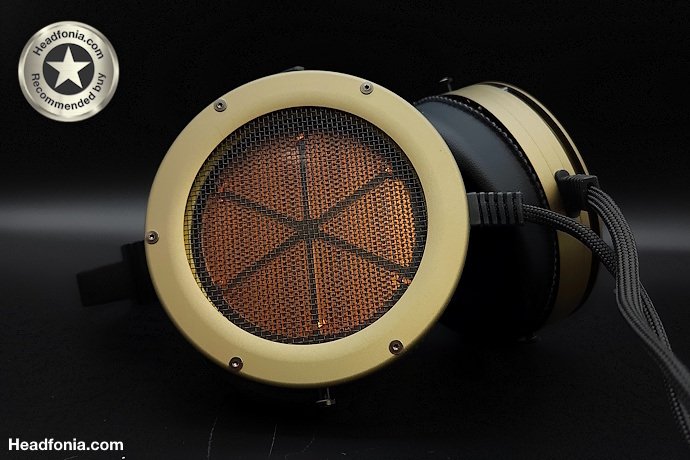
The ES-2a is an open-back electrostatic headphone and a tribute to the legendary Stax Omega headphone. It is designed to provide the ultimate listening experience, closely resembling the original.

Compared to the ES-1a – no longer available – the newer version according to ES Lab improves on all aspects, including driver technology, housing and tuning. On the inside of the ES-2a, we find a 90mm driver made from high-grade, ultra-thin Mylar film, thinner than human hair.
For the first time in the industry, ES Lab adopt an embossing printing process for the ultra-thin film dust screens. By applying ultra-light compressions to the film, a matrix of embossed patterns is printed onto the dust screen, which is less than a micrometer thick. This minimizes distortion while making the dust screen acoustically transparent.
ES Lab is proud of their technical achievements and if you want to read more on how the driver is being built, you can find all that info on the ES-2a product page here.
Let’s dive in further!

The Box, Accessories & Price
The ES-2a arrived in a Paulownia wooden storage case. It’s a simple but nice box as you can see in the pictures.
On the inside of the box, I found the headphone, a manual, a set of the optional 2A-001 filters (more later) and a replacement film. Probably the regular package only contains the headphone with the manual.
The ES Lab ES-2a is selling for HK$15,500 or around $2,000 USD. You can get it directly from ES Lab or through one of their international dealers like Apos. You get a one-year warranty on the unit.
For the price I did expect to get spoiled a bit more, but the number of electrostat accessories is limited anyway. In fact, if you compare the price of the ES-2a to that of some of the competition, you can clearly see it’s rather budget-friendly.
We’ll get into more detail on that in the comparison section later in this article.

Design, Build Quality
As said, the ES-2a looks like the classic SR-Omega headphone from Stax. If you have no idea how it looks, you can check it out here and see for yourself how much these resemble each other.
I quite like the design, even if it isn’t as original as say the CRBN. That said, I like the homage to the Stax and I think both headphones look stunning. Especially the headband and the drivers are eye-catchers.
For those not familiar with Stax, the ES-2a headband also resembles the latest Hifiman one you can find on the HE1000 and Susvara series, just to name two.
The ES-2a housing is crafted from CNC-machined aluminium alloy parts and a nylon arc, recreating the classic look of the omega. Each ES-2a driver is assembled in a clean room environment with hours of inspection work and the strictest contamination control.

The ear pads are attached to the chassis using a screw fixation mechanism and swapping them out is a possibility. The pads are made from PU leather. The (hard-wired) cable used for the ES-2a is a 6-core PC-Triple-C copper cable with insulation cladding and gold-plated connectors as you can see in the pics.
From a build quality perspective, the ES-2a scores good as well, and the only point of attention here is the pad finishing. It’s no issue to use, but it doesn’t look very symmetrical and high-end. We’re used to seeing better at this price point.
This brings us to the next chapter, where we have more to say about the pads.

Comfort, Usability & Isolation
The ES-2a without cable weighs 450g which (unfortunately?) the weight segment most of the higher-end headphones are in.
While it isn’t a light headphone, the headband system and pads do a great job. The headband evenly distributes the weight on the top of your head, and it doesn’t have any painful pressure points even after hours of use.
The side pressure is just right: Comfortable but secure to keep the headphone in the perfect place, delivering the best possible sound quality. The pads are soft and very comfy but there is an important remark to make.
As said, the pad finishing isn’t the best looking at the stitching and outlining, but what could be more annoying is the pad depth. The pads aren’t the thickest and depending on your ears, they will touch the fabric of the acoustic filter on the inside.

Some people really don’t like that, so do try the headphone on first. For me personally this isn’t an issue with any of the filters, but they’re very close. Another thing some might find annoying is the driver flex. While normal and completely acceptable, you will experience this when putting the headphones on/off or adjusting them.
This headphone is one that you’ll be using at home or in your office in quiet environments as all the music leaks out and every single noise will crawl in. The ES-2a does need an EST amplifier and those usually are not portable either. The ES-2a comes with a hardwired 2.3m cable, so you do have a good range from your amp.
Sound
Sound – Introduction
This is the section where we find out how the brand describes the sound (signature) of the unit in question. For the ES-2a we don’t find a lot except for that it is designed to provide the ultimate listening experience, closely resembling the original Stax Omega.
So, let’s dive in further!

Sound – General
The ES-2a review was done with a small selection of EST amplifiers. I used the Audiovalve Solaris, the Shangri-La Jr. and the ES Lab EHT-7 energizer with a whole series of headphone amplifiers such as the SAEQ Armageddon, Feliks Envy Susvara Edition and the Auris Audio Headonia 300B.
The DAC used was the Musician Aquarius (optical), fed by the Eversolo T8 and ROON from my laptop. The AS-2a has the stock configuration (stock filters – see later)
When I first started listening to the ES-2a a couple of months ago, it immediately captivated me with its brilliant mix of EST performance and musicality, created by its full body, lovely tonality and excellent bass performance.
The amount of body you get from the ES-2a depends on the amplifier you use it with, and it’s mostly the lower and that is impacted in this regard. It goes from neutrally musical to fuller and bass-heavier, but the great thing here is that the ES Lab electrostat can do it all.

From a sound stage point of view, the ES-2a of course scores very well, with a wide as well as deep presentation and excellent layering. The latter also being very amp dependent. The ES-2a combines this with a nicely spacious presentation, giving you all the room needed for tonal extension and decay. It’s ear pleasing and natural.
As an electrostatic headphone, the ES-2a excels in PRaT though that can be tuned by swapping hardware if you’d like it to be slower (think tubes). The level of precision and detail is very good, and the ES-2a is very revealing.
It does that while always remaining musical, and you don’t get an analytical more boring (for some) signature. It’s one of the reasons why so many users love it. The smoother tonality and touch of warmth make this an addictive headphone, and that combined with the dynamic presentation results in always wanting to listen to more of your favorite tracks.
Is the ES-LAB the most precise and revealing EST headphone in the collection? Maybe not, but it’s still performing at a high level and not lacking in this regard at all.

Like I mentioned before, one of the things I really like is the bass presentation. The ES-2a is not bass shy and you can easily increase its bass weight by changing amps. You get a spot-on mix of quality and quantity. Bass is deep, with excellent sub-rumble and the layering is a pleasure to experience.
The mids perfectly connect to the bass, and here you get a lovely spaciousness, clarity, depth, layering and overall timbre. The vocal presentation is a bit more to the front but again that is a bit amp dependent.
The overall characteristics of the ES-2a are also present at the top end. You get all the precision and extension with a nice energy that contrasts with the punchy bass, but it never sounds harsh or sharp in any way.
The treble section is engaging, dynamic and softer to the ear. This is especially nice for longer listening sessions, as well as when you listen to multiple musical genres.
Let’s discover how the ES-2a’s sound changes depending on the setup. Click here to go to the next page and keep reading.




creditSource link