
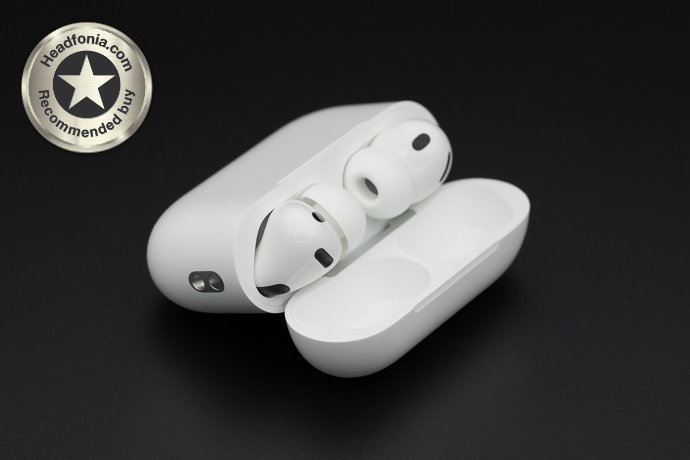
Today we review the $249 USD Apple AirPods Pro 3 True Wireless Stereo In-Ear Monitors.
Disclaimer: I purchased the Apple AirPods Pro 3 myself at launch and the article reflects my unbiased experience with the product.
Apple
Apple hardly needs an introduction, but its relationship with personal audio goes much deeper than AirPods. The company has been involved in digital music for decades through iTunes and the iPod, as well as the $3 billion acquisition of Beats Electronics and Beats Music in 2014.
The bigger shift for portable audio came in 2016 with the original AirPods. Apple introduced its own W1 wireless chip alongside them and built the entire experience around instant pairing, automatic device switching, sensors, Siri integration, and tight communication between hardware and software. Looking back, that formula was arguably more important than the sound quality itself, because it established what people now expect from modern in-ears.
Apple improved that formula with the first AirPods Pro in 2019. The Pro introduced an in-ear design with silicone tips, Active Noise Cancellation, Transparency Mode, and Adaptive EQ, moving AirPods from a convenience-oriented wireless earbud toward something truly in-ear. The AirPods were a huge success. Its Transparency Mode and the ANC were industry-leading.
Apple AirPods Pro 2 Review
Since then, Apple has continued developing its own chips, microphones, sensors, DSP algorithms, Spatial Audio (their own sound virtualization system), hearing-related features, and increasingly sophisticated noise-control systems.
This is exactly what makes AirPods interesting to review from an audiophile perspective. Apple has enormous control over both the hardware and software sides of the signal chain, and with every AirPods Pro generation, the gap between a mainstream consumer TWS and a genuinely capable-sounding wireless IEM has become smaller. They even started to give out info about the driver inside.
Apple AirPods Pro 3
The Apple AirPods Pro 3 is Apple’s third-generation flagship TWS IEM and the successor to the hugely successful AirPods Pro 2. Apple announced it in September 2025 with a retail price of $249 USD, keeping the same launch price as its predecessor.
At first glance, the AirPods Pro 3 does not look like a radical departure from the familiar AirPods Pro formula. Apple kept the stem-based design and, interestingly, the H2 chip from the previous generation. Underneath, however, quite a lot has changed. Apple redesigned the internal acoustic architecture, revised the shell geometry and fit, introduced new foam-infused silicone tips in five sizes, improved ANC performance, increased water and dust resistance to IP57, and extended single-charge battery life to 8 hours with ANC enabled.
There are also several features that have little to do with what we traditionally expect from an IEM. The AirPods Pro 3 adds an optical heart-rate sensor for workouts, expands Apple’s hearing-health features, supports Live Translation with compatible iPhones, and continues to integrate features such as Adaptive Audio, Conversation Awareness, Personalized Volume, Spatial Audio, and head-tracked audio into the same package. The charging case also carries Apple’s second-generation Ultra Wideband chip for more precise Find My functionality.
I have been using my pair since launch, and I think the interesting part about the AirPods Pro 3 is that Apple did not simply pile more smart features onto the Pro 2. There are meaningful changes to the physical fit and acoustic system as well, and those changes affect both the ANC performance and, more importantly for us, the sound. We will get into all of that throughout the review.
Design, Build Quality & Fit
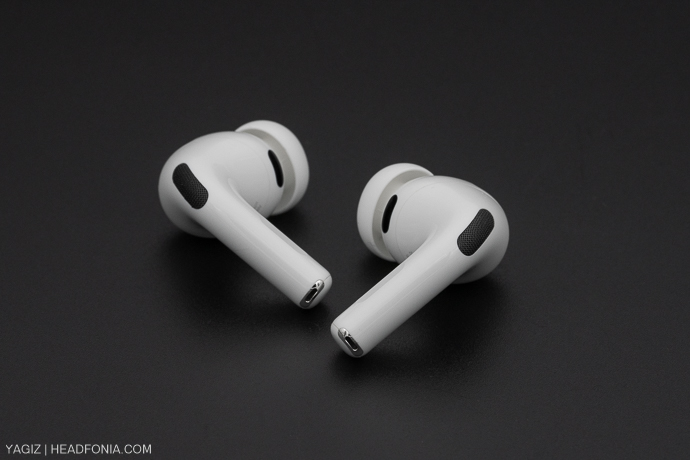
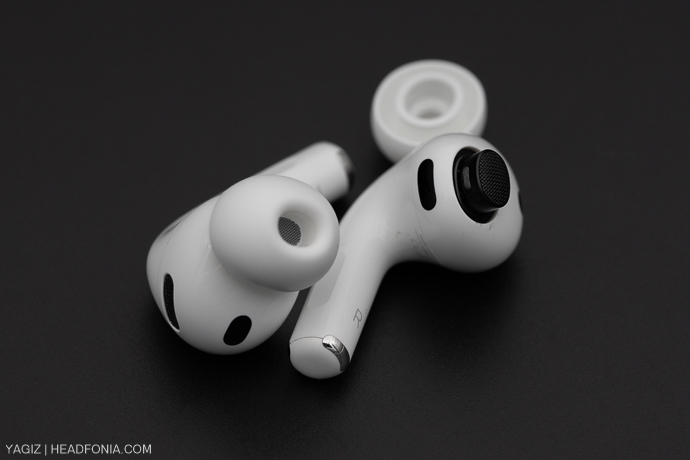
Apple did not reinvent the AirPods Pro visually with the third generation, and I think that was the right decision. Why mess with something that’s been working with 100-plus million people? Yup, you heard it right. These things sell like hotcakes. The AirPods Pro 3 is still instantly recognizable with its glossy white finish, short stem, black sensor and microphone sections, and Apple’s proprietary nozzle. Put it next to the Pro 2, and they clearly belong to the same family, but the differences become much easier to spot once you actually wear them.
Apple redesigned the internal architecture and made the main body of each earbud smaller. More importantly, the geometry around the nozzle and eartip has changed, positioning the tip differently inside the ear rather than simply shrinking the old shell. Apple says the design work involved more than 10,000 ear scans and over 100,000 hours of user research. Marketing numbers aside, the fit really is different from the Pro 2.
The AirPods Pro 3 definitely goes in deeper and feels more anchored in the ear for me. I had really bad luck with my old AirPods Pro 2‘s fit and quickly purchased third-party tips that go deeper for a better seal and better stability. On the other hand, the new foam-infused silicone tips of the AirPods Pro 3 are quite good.
The new tips retain the softness and convenience of silicone rather than behaving like traditional memory foam, but the added foam structure helps them maintain their shape and seal and offer improved passive isolation, at least for my ears. Combined with the revised shell geometry, the result is a more secure fit for my anatomy. I would also like to add that my wife, who has VERY small ears, is happier with the fit of the AirPods Pro 2 with S tips.
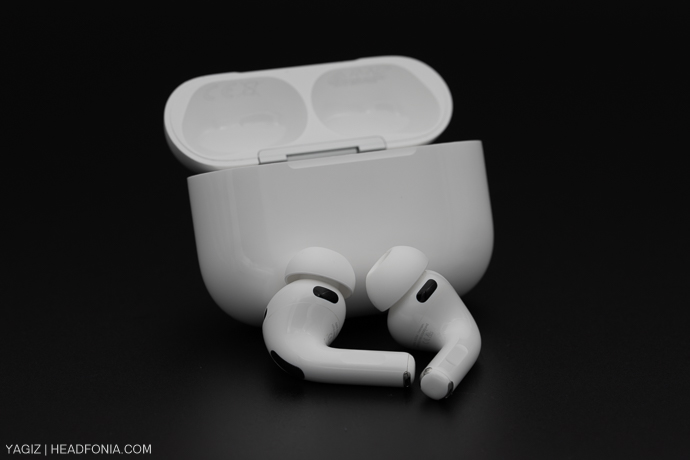
Comfort is excellent for me. Each earbud weighs practically nothing, and despite the more secure fit, I don’t feel any pressure against the concha. I can wear them for several hours without much fatigue. Of course, fit is extremely personal, but this has been my experience.
The build itself is classic Apple. Everything feels tightly assembled, the glossy plastic finish is smooth and consistent, and there are no creaks or loose parts. I actually really like how seamless and fluid the whole design feels. There are almost no visual interruptions in the shell, and that gives the AirPods Pro 3 a very clean and polished appearance.
There is a downside to that smoothness, though. The earbuds are genuinely difficult to grip. The combination of glossy plastic and the flowing shell shape means they can slip out of your fingers quite easily, especially when removing them from the case or putting them back in.
In my experience, this leads to more accidental drops and general mishandling than with most of the other TWS models we have reviewed here. It is a small usability issue, but one that becomes quite obvious after living with them for a long time.
Another thing worth keeping an eye on is the black mesh sections covering the microphone and vent areas. They look tidy and integrate nicely with the design, but these recessed mesh panels can collect skin residue and debris over time. Since the AirPods rely heavily on their microphones for ANC, Transparency Mode, Adaptive Audio, and call quality, keeping these areas clean is important.
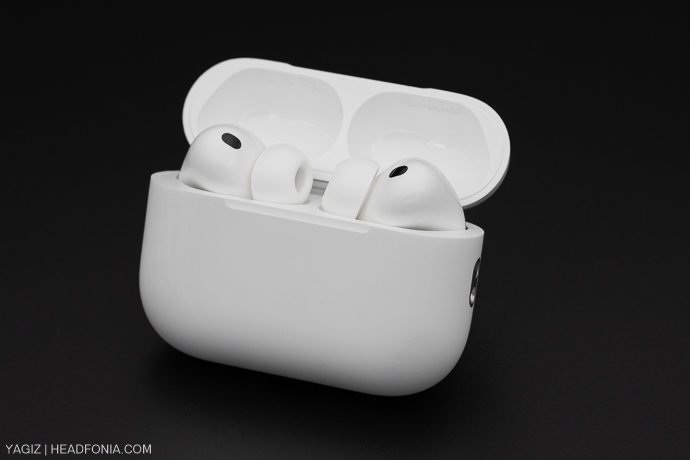
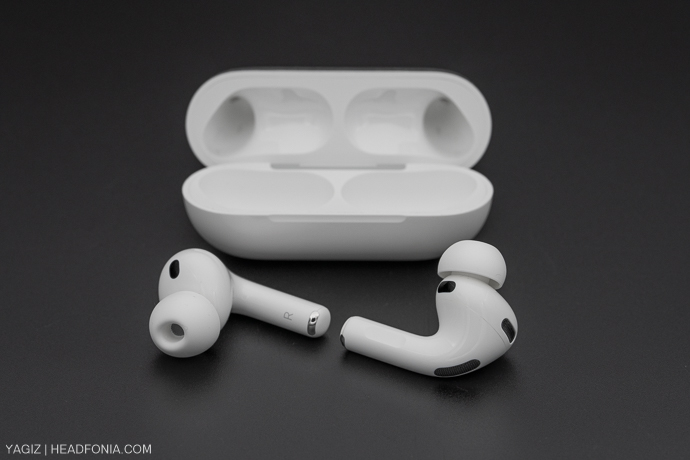
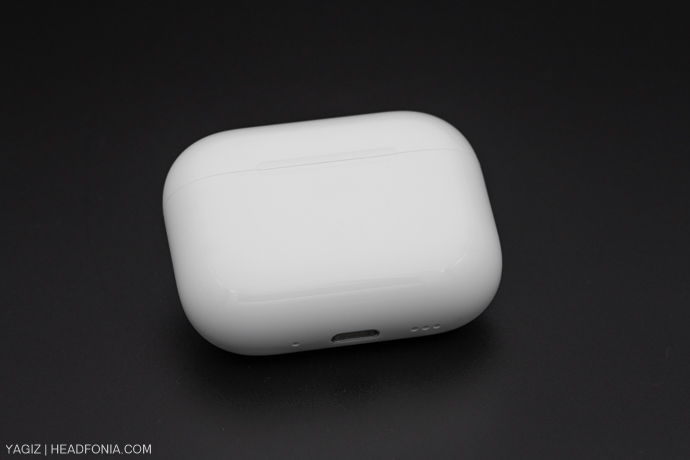
The charging case follows the same philosophy. It remains very compact and pocketable. You still get the front status LED, built-in speaker for Find My, USB-C port, MagSafe and Qi charging support, Apple Watch charger compatibility, and the lanyard loop on the side. One major caveat is that the glossy white scratches really, really easily. It’s IMPOSSIBLE to keep it in mint condition. It scratches even inside a protective case, which is just amazing, honestly. That said, Apple did update the IP rating. Now, both the AirPods Pro 3 and the charging case are rated IP57 for dust, sweat, and water resistance.
Overall, Apple has refined an already very successful form factor rather than changing it for the sake of looking new. The Pro 3 looks familiar, but the smaller body, revised insertion angle, new tips, and more secure fit make this one of those redesigns that makes much more sense in the ear than it does in product photos.
AirPods Pro 3 – Comparative Sound Impressions
The AirPods Pro 3 has a U-shaped signature with good coherency and clarity. It’s a crowd-pleaser. It has a tasteful bass boost, a more energetic ear-gain region than the AirPods Pro 2, and better presence and extension in the upper treble. Apple has not turned the Pro 3 into an analytical TWS, but the tuning is cleaner, more contrasty, and more agile than before.
That is important because I was never completely sold on the AirPods Pro 2’s sound. I found it a little too warm and, frankly, a bit veiled. It behaves well with modern, well-recorded R&B, hip-hop, rap, pop, etc., where its fuller low-end and relaxed presentation work nicely. However, whenever I wanted more clarity, separation, or excitement, the Pro 2’s technical capability always left me asking for more.
The AirPods Pro 3 fixes most of that without completely abandoning Apple’s generally consumerly balanced approach. Bass emphasis has shifted downward, the midrange is cleaner, the ear-gain region has more energy, and there is more information up top. The result is a TWS that feels better controlled and substantially more alive.
Bass
Bass is still elevated, but Apple has changed where that emphasis comes from. The AirPods Pro 2 had a bolder mid-bass presentation. It sounded warmer, thicker, and somewhat rounder, but its bass could also feel a little loose. That extra mid-bass energy contributed heavily to the Pro 2’s overall warmth and gave instruments plenty of body, although it could also mask some information in the lower mids.
With the AirPods Pro 3, the highlight has shifted from mid-bass toward sub-bass. There is still enough punch to keep the presentation engaging, but the mid-bass is cleaner and better controlled. The low-end feels less swollen, and bass hits recuperate much faster, so it feels more agile.
I much prefer this approach. Sub-bass reaches deep and provides satisfying physicality when the recording calls for it, while kick drums and bass guitars no longer occupy quite as much space in the presentation. This also gives the rest of the frequency range more room to breathe.
The driver itself seems better composed as well. Bass notes feel tighter and more defined, and the Pro 3 handles consecutive low-frequency hits more confidently without everything starting to blend into a frequency soup. It is not the fastest or most textured bass I have heard from an audiophile TWS, but compared to the Pro 2, this is a clear improvement. I like it, especially with the added on-the-go convenience.
Midrange
Cleaner bass transition and less mid-bass quantity immediately benefit the midrange. The Pro 3 has less warmth bleeding into the lower mids, so vocals and instruments come across with better definition and clarity.
You trade thicker male vocals and an overall thicker instrument tone of the Pro 2 for more transparency and separation on the Pro 3. More importantly, Apple has increased the energy through the upper midrange and ear-gain region. Vocals are more articulate and feel more present, while guitars, strings, and percussion have noticeably better clarity. This is probably one of the biggest reasons why I perceive the AirPods Pro 3 as less veiled than its predecessor.
It is still a smooth tuning compared to many analytical IEMs in the industry. Apple has not pushed the upper mids far enough to make vocals or cymbals shouty or aggressively forward. There is enough restraint to keep the AirPods Pro 3 easy to listen to for long periods, but this time there is considerably more contrast between different elements in the mix. So whatever they did acoustically, it improved the instrument separation on top of the bonus we got from the tuning change.
Treble
The AirPods Pro 2 was relatively restrained in this region, particularly up top. That contributed to its smooth and forgiving character, but also limited the perception of air and spaciousness. The AirPods Pro 3 has more upper-frequency energy and noticeably better extension.
The lower treble remains controlled, so cymbals and percussion do not become sharp or aggressive. Instead, most of the improvement comes from the increased extension. There is more sparkle, more air, and better perceived separation between instruments. This also changes how we perceive height; the AirPods Pro 3 has a noticeably superior soundstage compared to the Pro 2. My benchmark tracks do not feel as closed-in as they did through the Pro 2.
In my opinion, the additional upper-end energy is exactly what Apple’s tuning needed, in my opinion. Even more so than the ear-gain boost we got. Overall, I’m really impressed with the Pro 3. It’s a nice-to-have item, especially with the world-class ANC.
Technical Performance
The AirPods Pro 3 sound cleaner and more controlled when the recording becomes busy than ever before. Its ability to handle congestion has improved considerably, and individual instruments remain easier to track when multiple instruments occupy similar parts of the frequency range.
Part of that comes from the tuning. Reducing the relative mid-bass emphasis and adding more upper-mid and treble presence naturally improves perceived separation and contrast. However, after using the Pro 3 for more than 10 months, I also think the driver itself behaves better under load. Transients feel cleaner, bass recuperates faster, and the entire presentation sounds more disciplined.
Imaging is quite good for a mainstream TWS, and the soundstage has respectable width with improved height perception compared to the Pro 2. The extra upper-treble presence helps here considerably. It still does not produce the kind of holographic staging that the best audiophile-focused TWS IEMs can manage, but AirPods Pro 3 is a lot cheaper than those IEMs while offering some industry-best features. You trade SQ for convenience, and vice versa.
Resolution is good. This is still where products like the Noble FoKus models we have reviewed can pull ahead. The AirPods Pro 3 does not extract every micro-detail from a recording, nor does it have the same level of tuning flexibility. Apple still refuses to give us a proper EQ, after all.
However, I think Apple made exactly the right sonic changes between generations. The Pro 2 was warm, smooth, and safe, perhaps a little too safe for my taste. The Pro 3 shifts some of that bass energy downward, cleans up the mid-bass and lower mids, adds more ear gain, extends the treble, and improves overall composure. The result is still an AirPods Pro, just considerably less bland.
The Apple Airpod Pro 3 TWS review continues on the second page. Click here or use the jumps below.
creditSource link